In a bid to create an introduction that was suitable for the style of piece I was composing I experimented with the ostinatos I had created. I decided to take the retrograde of the first beat of the original ostinato. I then decided to modulate the second and third notes down a fourth so that each time it was repeated these notes would modulate up a tone and form a 1 bar ostinato.
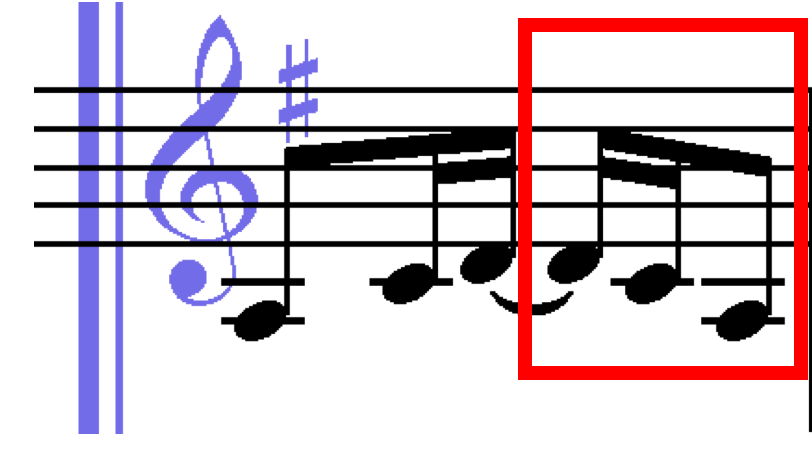
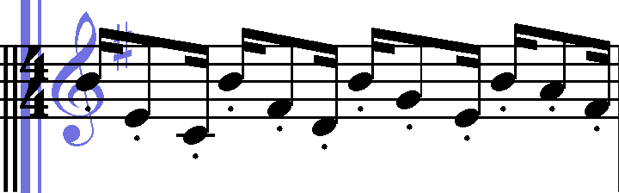
Extended ostinato created from the retrograde of the fragment.
I then decided in order to create some variation I would modulate the ‘centre voice’ into a different key so that in this example, the F# became an F natural.
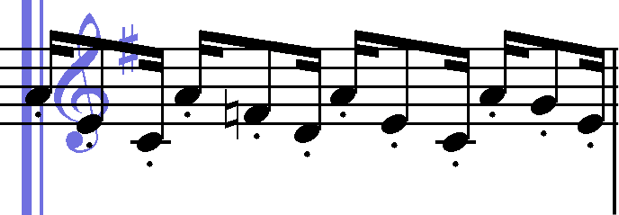

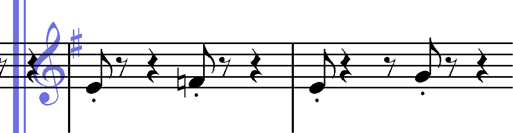
Following this I decided to expand the centre voice into an ascending idea hoping that it would be a fitting way to start my piece and that in some way I could develop it into the idea I had created.
Write the idea –> backtrack to a basic idea –> develop the idea back to the original
Moving away from the introductory passage to the piece here is the main section of the piece in 7/8 where I have developed the first two ideas and combined them into a 4-bar idea. The idea is essentially the two bars repeated with an adjustment to the 4th bar so that it flows nicely into being repeated and doesn’t seem so blocky.

the piece so far
This is the main crux of the piece so far. At the moment, I am essentially working in 3 sections.
- The FIRST being the introduction which to be honest is proving to be a bit of a struggle as I’m not 100% happy with what I have so far.
- The SECOND being the 7/8 section comprising of 2 variations on the original theme.
- The THIRD section comprising of variations on the variations.
In this section I have accentuated the essential beats of the time signatures I have chosen with a structure that reads 7/8-8/8-7/8-9/8 with the accents being in the cello. The role of the viola in this section is mainly repeating the development of the first beat motif and then extending it when there is an extra quaver or two added to the bar. The second violin’s role focusses on the first beat syncopated idea featuring retrograde and similar to the viola, an extra quaver is added when required. Finally, the violin 1’s role is the same as in the 7/8 section, taking the main motif and similar to the other parts, a quaver is added when required to increase the flow of the piece. Very basic compositionally however the complexity comes in the way the ideas are developed.
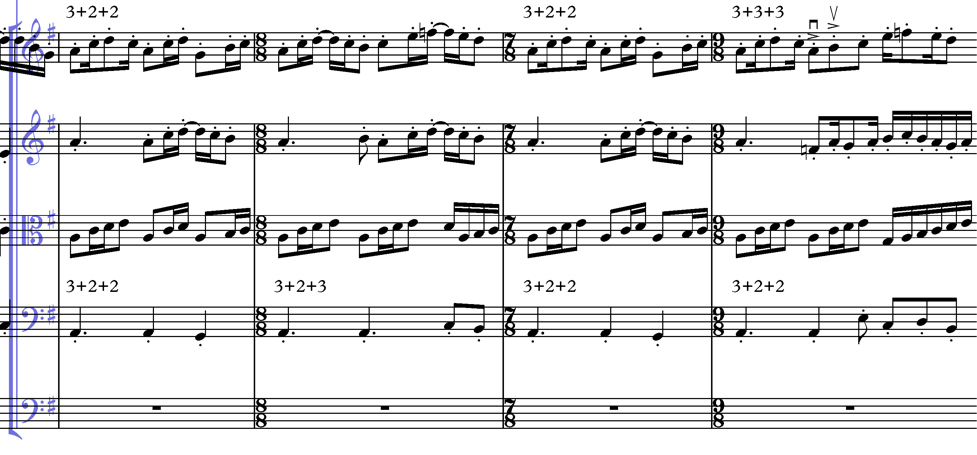
The ideas are coming together nicely however work is still required in linking the sections together.

 LJS Music Education