I began my process by creating a more complex version of the accompaniment in the double bass and outlined the descending fourths of the main motif. In a similar way to some of my other ideas I decided to layer this one between the cello and the viola to create an element of contrast in both timbre and pitch.
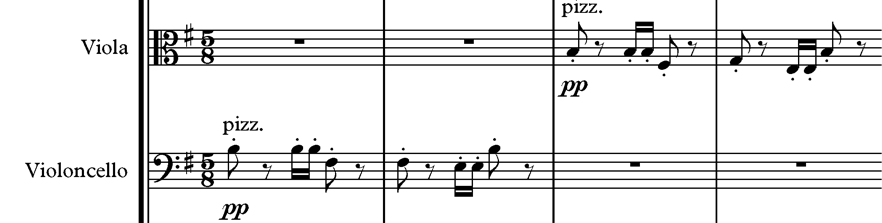
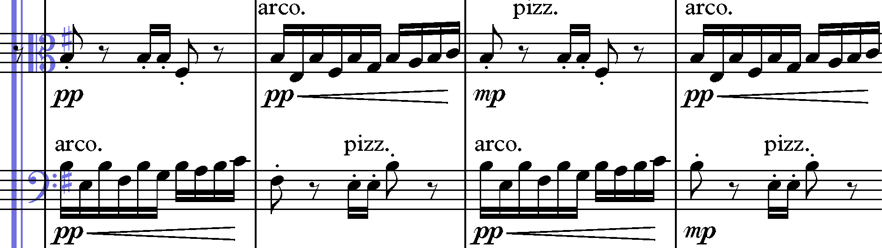
In this example, I combine the two Cello/Viola ideas and orchestrate them in a way that ensures that both ideas are played at the same time however one instrument per part is still possible. I have a combination of pizzicato and arco however I also had to ensure that there was enough time for the instrumentalist to change between the two techniques.
In this example, I have shown how the excerpt modulates to the other version of the syncopated motif which I composed part way through my process. Each part has a key role and is different to any of the other parts being played however most parts work in combination with another part.
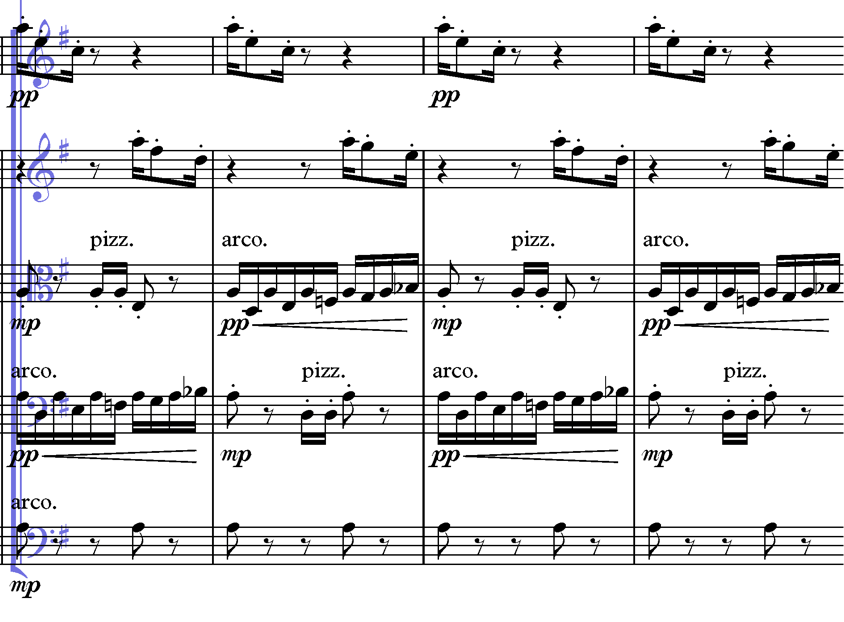
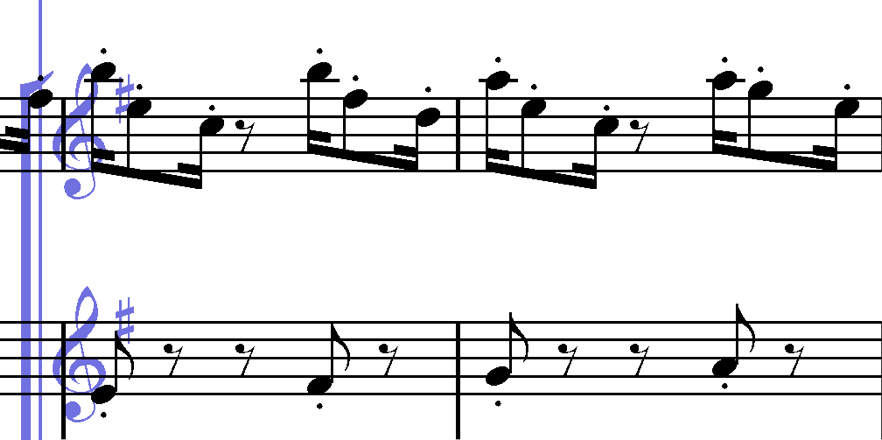
In this example, I have reintroduced the simplified version of the motif in the 2nd Violin and have transferred the melodic part into the 1st Violin. I later on increase the frequency of the notes in the second Violin and grow the material so that it links into the next section.
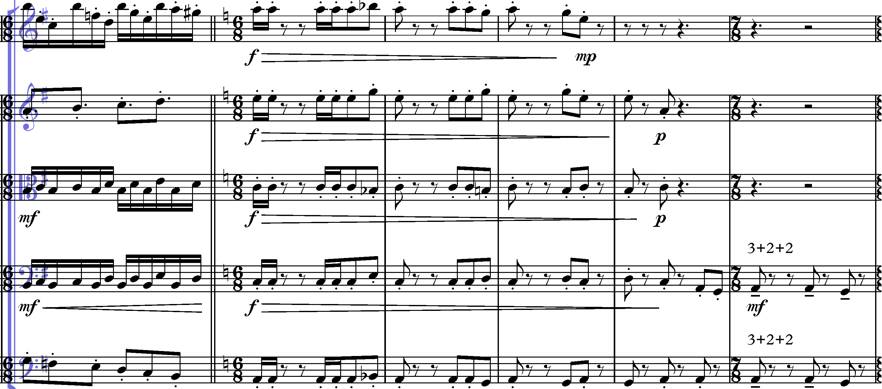
This example below shows how the two main sections link together. I have omitted the quaver rest from the 1st Violin part and diminished the length of each note so that the entire (originally 2-bar motif) fits into a single 6/8 bar. Each of the other parts has been developed so that it grows into the 4-bar transition section. The transition section is written in a way that enables a clean flow into the 7/8 section. The instrumentation is gradually reduced and the rhythm of the next section is introduced early so the change is not abrupt.

 LJS Music Education